Why Do Teeth Shift After Braces and How Do Retainers Prevent Relapse?
Wondering why teeth shift after braces? Learn what causes orthodontic relapse, how retainers keep teeth straight, and how Nu Dentistry Garden Oaks can help!
Read More
Medically Reviewed by Dr. Ali Tameemi
Teeth continue shifting throughout life due to natural jaw changes, not just orthodontic relapse — and the difference matters enormously for how you manage retention. Retainers aren't a temporary phase after braces; they're a permanent anti-aging protocol for your smile. Understanding what's actually happening inside your mouth helps you make smarter decisions about which retainer type protects your results long-term.
Most people assume that if their teeth crowd up a decade after braces, their treatment failed. That assumption misses something important about human anatomy.
For Houston-area patients, true orthodontic relapse is driven by periodontal ligament memory — the elastic fibers anchoring each tooth retain a "pull" toward the original position. This force is strongest in the first one to two years after braces come off, which is why early retainer compliance matters so much.
What happens at the ten- or twenty-year mark is different. According to Healthline, teeth shift throughout life due to the changing shape of your jaw as you age, pressures from eating and talking, and other factors entirely separate from your original orthodontic problem. Human jaws naturally narrow and grow forward during adulthood — a process called physiological mesial drift — meaning teeth would crowd over time even in someone who never needed dental braces.
This distinction has a practical consequence: retention isn't an extension of orthodontic correction. It's a permanent defense against craniofacial aging. Framing it that way changes the conversation from "how long do I have to wear this?" to "what's the most sustainable system for the rest of my life?"
Harvard Health notes that retainers also help maintain bite contact — how upper and lower teeth meet during chewing — and that protecting this relationship matters well beyond the initial retention period. Shifting teeth create uneven forces that accelerate wear on natural teeth and previous dental work like tooth crowns, porcelain veneers, and implants.
The moment brackets are removed, your teeth enter a phase called occlusal settling. Upper and lower molars need to interlock properly, and this requires small micro-movements in the weeks following removal.
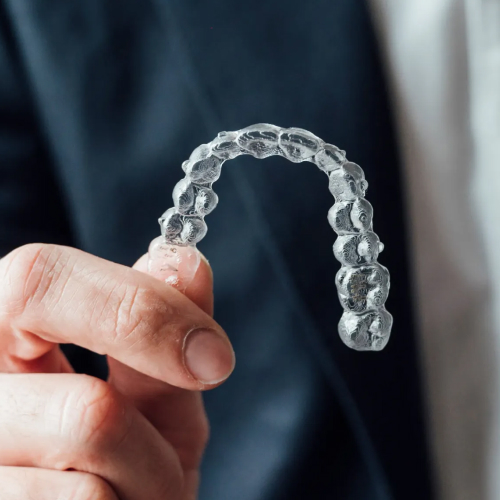
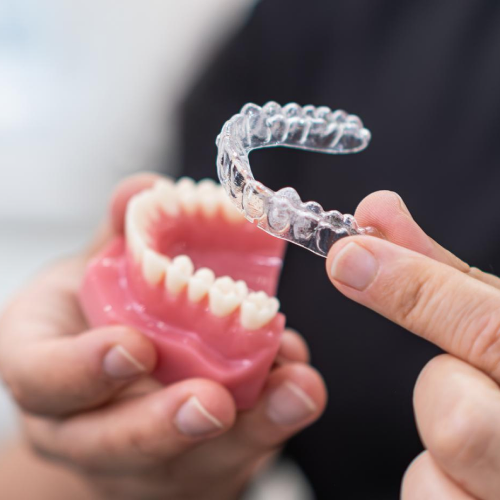
Here's where retainer choice becomes surprisingly important. Rigid clear retainers — the Essix or Vivera style that covers the entire biting surface — physically prevent upper and lower teeth from making full contact. Worn full-time for too long, they can hold the back teeth apart, creating what orthodontists call a posterior open bite. The front teeth touch but the molars don't fully seat, which disrupts chewing forces across the entire arch.
Hawley retainers, the wire-and-acrylic type, leave the biting surfaces free. A Healthline overview of retainer types highlights this as one of the practical differences between the two removable options — the Hawley design allows natural settling contact while still holding tooth positions. This is one reason many orthodontists adjust wear schedules after removal, transitioning patients away from full-time clear retainer use earlier than patients expect.
WebMD explains that for best long-term results, retainers should be placed within six months of finishing orthodontic treatment — and that without them, the results of braces may not last.
Permanent retainers — thin wires bonded to the backs of your teeth — are popular precisely because patients can't forget to wear them. But there's a risk that standard retainer guides rarely mention.
Bonded lingual wires experience mechanical fatigue from daily chewing forces over years of use. A wire that remains glued in place isn't necessarily functioning correctly. As the wire deforms, it can begin to exert unintended torque on individual teeth, tipping roots outward through the alveolar bone. This can cause root dehiscence — where the root moves beyond the protective bone envelope — and gum disease and recession, all without the composite bond ever breaking. Patients feel nothing unusual, yet slow, irreversible damage accumulates.
Signs worth watching for, even with an intact bonded retainer, include: one tooth that appears to be rotating or tilting slightly compared to its neighbors, gum recession localized to a single tooth near the wire attachment, or sensitivity in a specific tooth without an obvious cause. Any of these warrant a prompt check with your orthodontist — not a reassurance that "the glue is still holding."
Healthline's research on permanent retainers notes that while bonded retainers keep teeth from shifting, your dentist or orthodontist may remove one if it causes too much plaque buildup or irritates gum tissue — both of which can result from a wire that's no longer sitting passively. Regular professional monitoring isn't optional with a fixed retainer; it's the only way to catch fatigue-related problems before they become irreversible.
This is also why many orthodontists use a combination of both retainer types rather than relying on one alone — pairing a bonded wire with a removable retainer provides redundancy and allows for periodic inspection of what the wire is actually doing.
The right retainer system depends on your original treatment, your compliance habits, and your long-term dental health. WebMD's guidance on adult orthodontics reinforces that teeth never stop responding to pressure — which means retention is never truly "done." Mouthhealthy.org similarly emphasizes that wearing retainers as directed after braces is essential to keeping teeth in their new positions.
A few principles hold regardless of retainer type:
Relapse, aging drift, and wire fatigue are three different problems that can look identical from the outside. Getting the right diagnosis is what determines the right response.
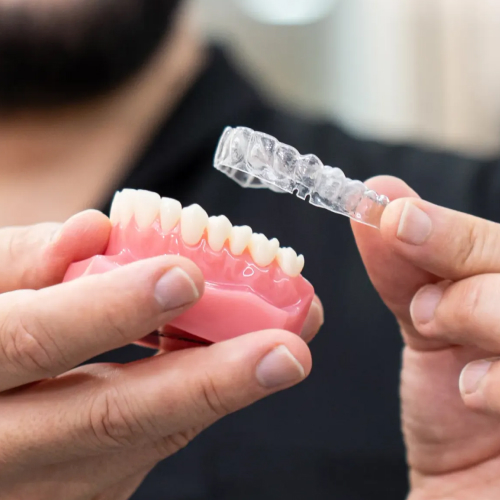
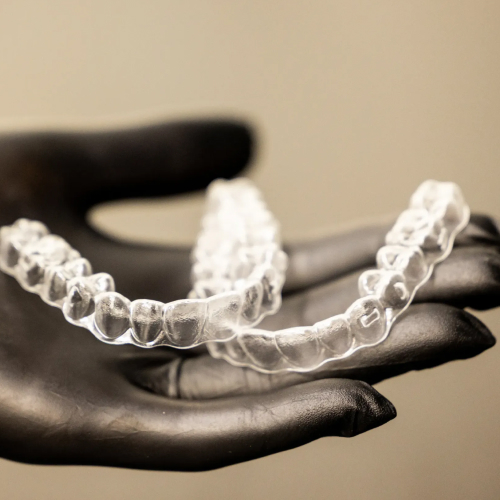
Whether you finished braces years ago and notice shifting, or you're wrapping up treatment now and want a long-term retention strategy, the team at Nu Dentistry Garden Oaks is here to help. Serving patients throughout Houston and the Garden Oaks community, we'll assess your current bite, review your retainer situation, and help you build a plan that actually fits your life. If you're also considering straightening options, we offer Invisalign as a discreet alternative to traditional braces.
Medical disclaimer: This article is intended for informational purposes only and does not constitute professional dental or medical advice. Always consult a licensed dentist or orthodontist for diagnosis and treatment recommendations specific to your situation.
Fresh news from the dental world


See what a visit to our modern, state-of-the-art dentist office is like!
Monday 9am - 6pm
Wednesday 9am - 6pm
Friday 9am - 6pm
Saturday 9am - 3pm
Check out what our patients are saying in Houston, TX


“Never Thought I'd Say It”
I never thought I’d say it, but going to the dentist is actually fun now. I recently came in for a root canal, and I got to sit back and catch up on Stranger Things without any pain!

“Anxiety Has Kept Me Away ”
I usually have such huge anxiety when I go to a dentist appointment, which means I always put off visits until the last minute to disastrous consequences. However, Dr. Loggins helped me with sedation, so the entire process was a breeze!

“The Best Dentist In Houston, TX”
We have been looking for a family dentist for a long time, we have tried a bunch of places but nothing felt quite like home. Not too long ago we stumbled upon Nu Dentistry and met Dr. Ali. Not only was he professional, kind, and gentle, but he always finds a way to fit us in when we need an appointment. He’s also pretty funny! I appreciate that he takes the time to explain what he’s doing, before he does it. That really puts me at ease.
“Never Thought I'd Say It”
I never thought I’d say it, but going to the dentist is actually fun now. I recently came in for a root canal, and I got to sit back and catch up on Stranger Things without any pain!
“Anxiety Has Kept Me Away ”
I usually have such huge anxiety when I go to a dentist appointment, which means I always put off visits until the last minute to disastrous consequences. However, Dr. Loggins helped me with sedation, so the entire process was a breeze!
We are proud members of these dental organizations and accreditations







We are dedicated to providing you with only the best quality dental care